Monday, February 12, 2007

Happy Vegan Birthday!


So delicious I could scream! And beautiful to boot.

These were the Coconut Cupcakes with Lime Buttercream Frosting, from Vegan Cupcakes Take Over the World. In celebration of my (not 20, not 40) decade achievement this past Friday, I made these to share with my birthday twin in Brooklyn, NY. We both love coconut more than anything, and have a history of eating it straight out of the bag! We usually mail each other coconut gifts, but this year we were able to celebrate together! So, with coconut oil, coconut extract, dried coconut and coconut milk, these cupcakes were perfect! (I also made coconut lime cookies from Vive le Vegan! - too delish for words!).


But the highlight of our special day (for me) was visiting Candle Cafe in Manhattan, which was all that I'd dreamed it to be (although a little steep in price but what the heck? It's my birthday and the husband is getting the bill :)

This is what I had: cashew crusted tofu with roasted butternut squash puree over black rice pilaf and greens.


And this is what my friend had: seitan stuffed bell pepper with green beans. I think that hers was better than mine! Hubby had a chili seitan sandwich, which was also excellent, but he scarfed it down before I got a photo.


But the best of all, was the huge, thick, sweet but tangy piece of carrot cake - possibly the best I've ever had (sorry Mum and Dad!). Thank you, Candle Cafe, for this moment: "Which desserts are vegan?" "All of them!!" (just had to check!)


One last photo: as we were leaving, I noticed that Candle Cafe was located directly next door to (don't know if you can see it): Le Bistro Steak!!!


Here's to another thirty yummy, vegan years!

Monday, February 05, 2007

The History of Seitan....

I promised, several posts back, to post the history, tips, and uses for seitan. Well, here it finally is! I found the fact that seitan (and the other meat alternatives) are so ancient, completely amusing, considering the funny looks you get for mentioning what so many assume to be a, "new wave," product!

This particular photo is of Seitan with Portobello Mushrooms and Red Wine Sauce, from the book, "366 Ways to Cook Tofu and Other Meat Alternatives," by Robin Robertson. It is so incredibly easy, juicy, and almost elegant! I served it with red quinoa, an unusual type I found at my local Ukrop's grocery store. At the time, I didn't have portobello mushrooms on hand, so I used cremini and button, but I have made it with the portobello before and I think it's definitely better that way! Enjoy!

The Long History of Seitan and What the *$! To Do With It:

Pronunciation: Sigh, unfortunately, this IS pronounced much like the devil himself, "SAY-tahn." Of course, you can mumble when you pronounce it and emphasize the second syllable, so that people don't think you're crazy to eat, "say-TAHN." It even sounds more glamorous, don't you think?

What is it? (How it's made): Also known as "wheat-meat," seitan is made from the protein part of the wheat seed (gluten- sorry to those who are allergic!). Traditional seitan is made from rinsing and kneading the starch out of wheat flour. It is then shaped and simmered in a broth and/or soy sauce. The result is a chewy, meat-like product that is as versatile as chicken (and tastes suspiciously like it, too....but less stringy and dry)!

History: The truth behind the following is not for sure, but it does make sense, combined with knowledge about Buddhist cuisine: Seventh century Buddhist monks were looking for a meat alternative besides tofu. As they were making a dough out of wheat and flour, the starch rinsed off and they had "wheat meat." Today, it is called, "Buddha's Food." It was the Japanese who developed the process of simmering it in soy sauce and seasonings.

We do know that seitan has been popular in the Asian countries for centuries, while only recently becoming popular in America, thanks to the Seventh Day Adventists, Mormons and the macrobiotic diet (Timothy Aitken, Vegetarian Times magazine article, Feb. 1997).

Health benefits: High in protein, low in cholesterol and fat, there isn't much else to say!

Myths and tips: You may ask, "What the *** is it??" Now that you read the "what is it" and "history" part of this page (if you didn't, then just scroll up), it ain't so scary, now is it? In fact, this is probably the best meat-alternative to use when trying to entice (or trick!) meat eaters. It has the best meat texture among all other meat alternatives. Try it once and you're hooked!

Tip: You can buy pre-made seitan at Whole Foods Market, but I haven't seen this at local stores or even Ukrop's yet. White Wave, the company of the product at the top of this page, is a company well-known for its tofu and soy products. But seitan is not so cheap to buy, when it is pre-made.

Tip: Make your own seitan and save money! Use Vital Wheat-Gluten (I found this at Ukrop's grocery store, an Arrowhead Mills product) and follow the directions in either a vegan cookbook (like La Dolce Vegan! or Vegan with a Vengeance) or at an online source. The longer you simmer it, the firmer it gets. You can also buy Seitan Quick Mix from Harvest Direct.

Common uses: Seitan is used much like any meat alternative (fake meat). It can be baked, stir-fried, put in stews or chilies, stuffed into vegetables (or egg rolls- see below!)....as usual, the possibilities are endless! (So, why do people insist on asking, "What do you eat?!")

Sunday, January 28, 2007

After making that great batch of seitan the other week (see previous post), I was excited to try another seitan recipe on the following weekend. My absolute favorite dish when I was a child, was spaghetti and meatballs. Every year on my birthday, I would choose that without hesitation, for my birthday meal. To this day, it is the ultimate comfort food! Of course, red meat was the first thing I cut out, when I began to go vegetarian eight years ago. When I became vegan, I didn't ever want to eat anything that even resembled meat! Well, I thought I would give these a try anyway, and prove to my husband :) that I could make something that didn't involve what he considers "exotic ingredients" (such as coconut milk, curry paste, ginger, or seaweed).


I was so pleased with the way that these came out! They were very delicate, but the taste was heaven! It was even a little creepy, how much the seitan looked like ground beef when I crumbled it in my food processor. It actually made me a little sad, so I had to remind myself that I wasn't hurting any animals with THESE meatballs! :) I didn't have any whole wheat spaghetti on hand, so I used spelt rotini. I sprinkled them with some nutritional yeast mixed with gomashio (a sesame seed/seaweed mixture). Along with some good jarred tomato sauce, a rose wine, and my latest issue of Farm Sanctuary magazine, I was set to go! What a nice, winter meal.

Monday, January 22, 2007

When life gives you snow, make seitan!

After some questions were posted about how to make seitan, I took advantage of a recent snow day to make it again, taking photos of the process. I hope this helps some of you out there! It is not a difficult or scary process, and it makes about two pounds of seitan! You can freeze some in its liquid for later, or refrigerate it in the liquid for about five days. I used the recipe from Isa Chandra Moskowitz's cookbook, "Vegan with a Vengeance," but you can find it easily online at her site: http://www.theppk.com/ . I think that this recipe makes it a bit soft, so if you simmer it a bit longer than called for, it might be, "meatier" (not that I'm looking for that texture - but some of you may be). Let me know if you try this and how it turns out for you!

Step 1) Gather your ingredients: I have learned from many past mistakes (ok, current ones, too!) that you should gather all your ingredients beforehand! Nothing is worse than realizing you need something halfway through a recipe!

Make sure to use vital wheat gluten. If you use regular wheat flour, you have to rinse and repeat the kneading process several times!


Vital wheat gluten out of the box.


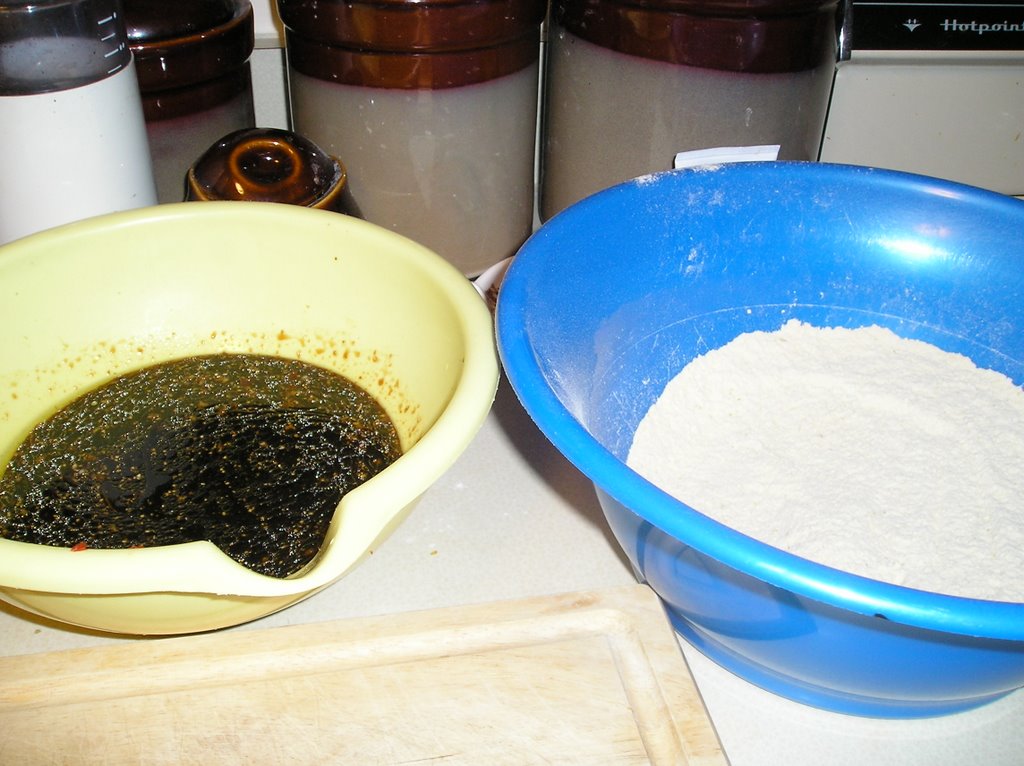
Step 2) Prepare the liquid and dry ingredients.


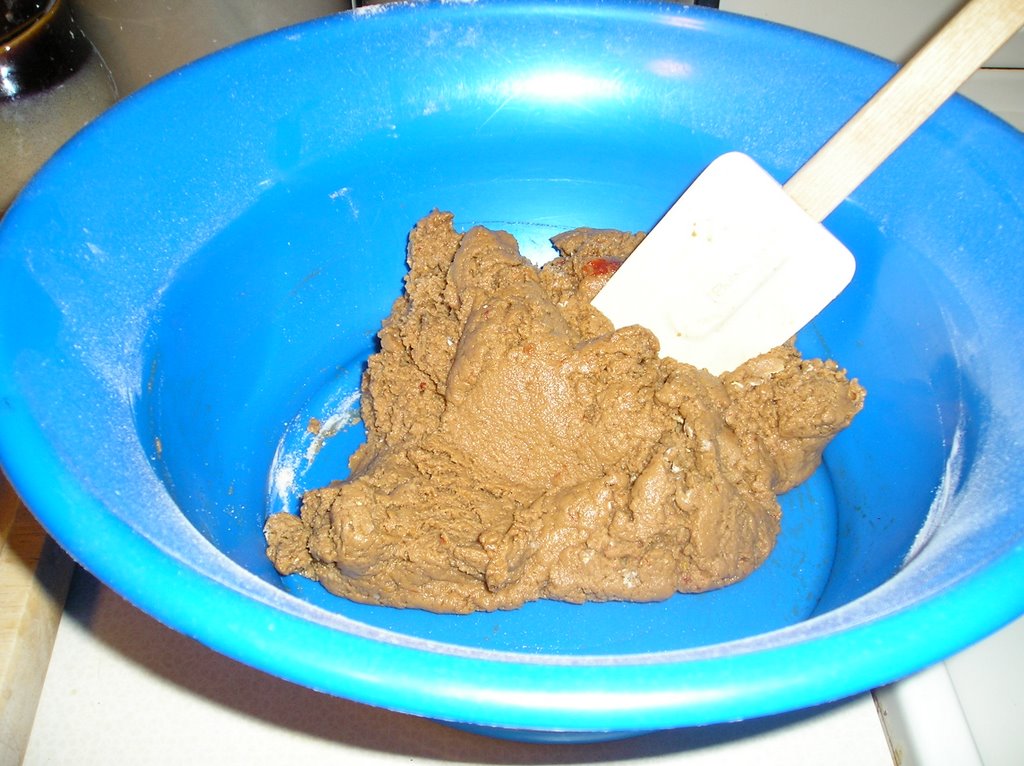
Step 3) Mix the liquid and dry ingredients with a spatula.

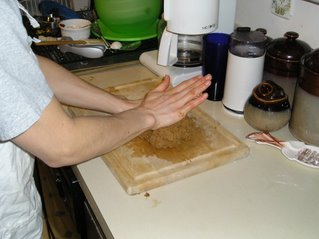
Step 4) Knead the mixture for five minutes. If you have ever made fresh bread (if you haven't, you just have to try it !), this is the fun part. It's sometimes hard to make it stay together. Kneading is pressing with the heels of both hands and pushing it away from you. You do this once, then turn it a quarter clockwise, fold the top back and knead again. If it doesn't feel "spongy" after five minutes, do it for a couple minutes more.
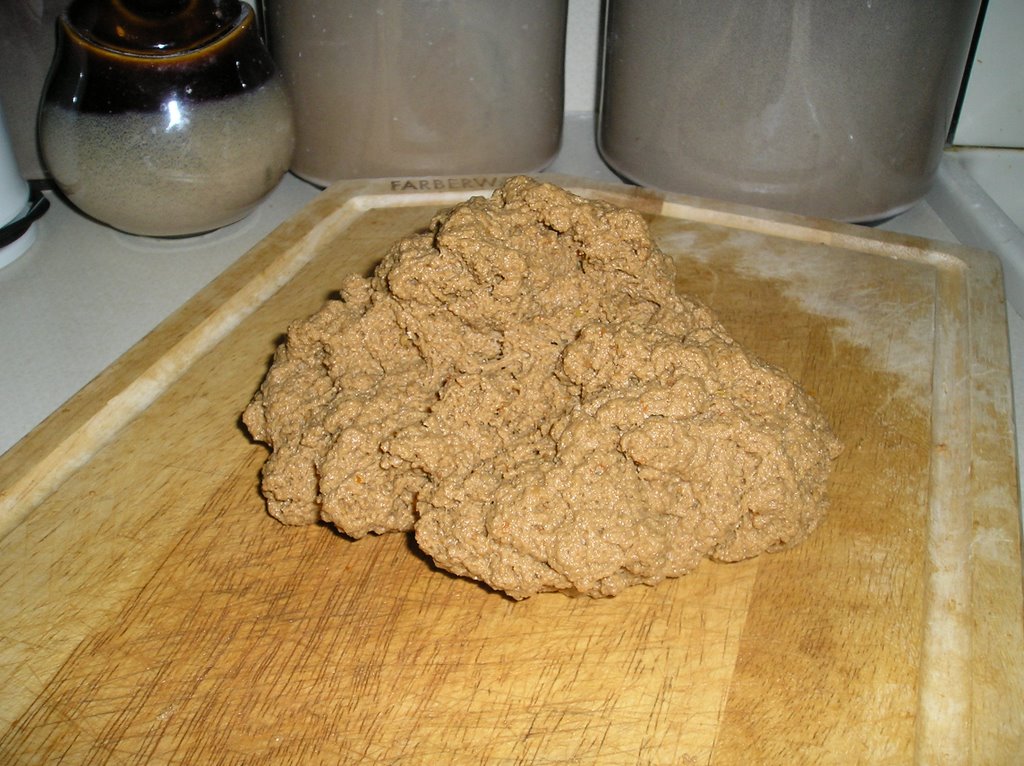
Step 5) This disgusting blob is the seitan dough, resting for five minutes on the cutting board. I can think of few things that look more gross . . .


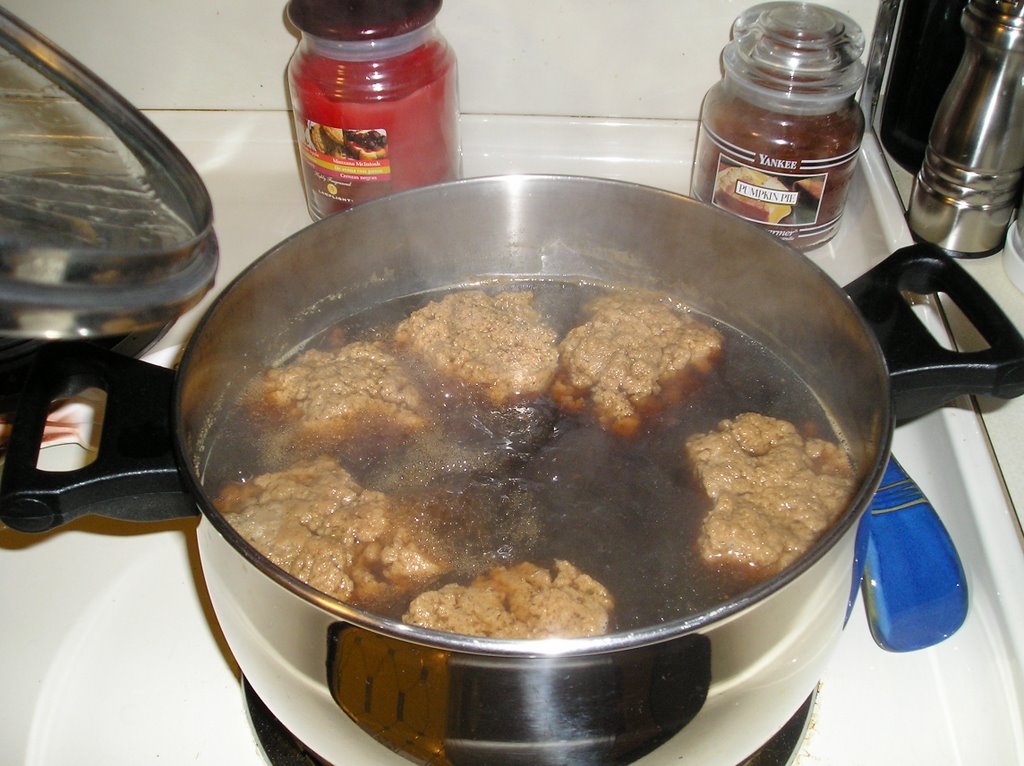
Step 6) Except this! Form the dough into a ten inch long piece, then cut into about six pieces. Don't worry! They will get much bigger as they cook.


Step 7) Finally! Put the pieces into the cold broth, bring to a boil, and simmer for at least an hour. Remember, the longer it simmers, the "tougher" it gets (Which is a good thing! Too short of a time can make it too mushy).

Step 8) Let it cool all the way down in the broth before you use it for a recipe or put it in the fridge/freezer. Remember to freeze or refrigerate it in the cooking broth!

My next post will be to explain the history of seitan, including health benefits, tips for preparation and use, and some photos of yummy things you can make with it!

Sunday, January 07, 2007

Homemade Seitan!


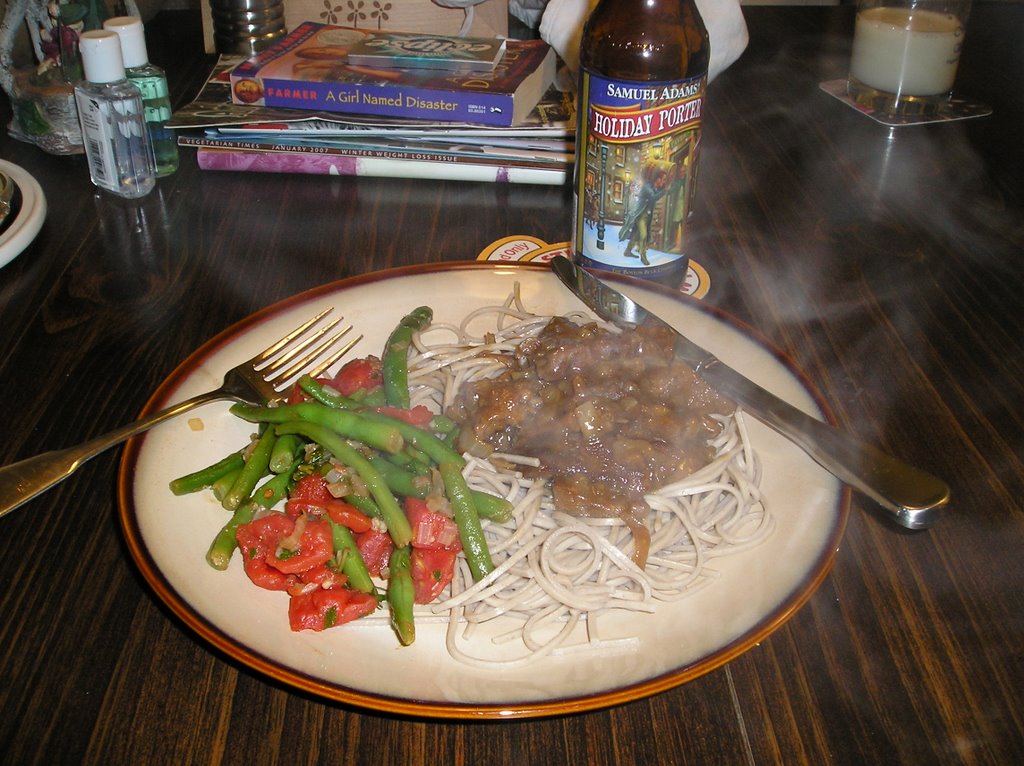
Well, I didn't make the seitan entirely from scratch, but I did use vital wheat gluten, and then followed the recipe from Vegan with a Vengeance. It came out quite good - less dry than the commerical, pre-made brand. I will post later about the history of seitan, but here is a yummy dish from Vegan Planet, by Robin Robertson. In fact, here are two! The first was Seitan Beer Stew over soba noodles, then I made Sauteed Green Beans (with garlic and tomatoes) for a 'side.' The stew had a wonderfully thick sauce and the seitan (homemade, remember?!) was nice and juicy and not too tough. Great flavor and not too "beery" (I am not a big fan of beer flavor or scent). The green beans were only ok. Maybe they were overpowered by the great flavors in the stew! Overall, an easy recipe to make and enjoyed by my omnivore husband! Rating of stew: *** and a half (stars). Rating of beans: **

Sunday, December 24, 2006

All I Want for Christmas is Peace, Love and Cupcakes

Merry Christmas! I have returned to the blogging world. After taking three graduate classes this summer, I finally have time to work on this much-neglected blog. Since it is the holidays, I am visiting my family and making them much-needed vegan goodies. First, I made Christmas Bread from La Dolce Vegan by Sarah Kramer. I also made Sparkled Ginger Cookies, Maple-Walnut Cookies, and Pumpkin Oatmeal Cookies from Vegan with a Vengeance by Isa Moskowitz. For Christmas dinner, some of my family feasted on sirloin steaks :( but my mother and I had Seitan with Mushroom Wine Sauce from The Vegan Planet. But the food that everyone scarfed down with Christmas hallelujahs, were the Gingerbread Cupcakes, from Isa's newest cookbook, Vegan Cupcakes Take Over the World. Here is a photo of the three that are left (for now), next to our Christmas tree and a very old gingerbread ornament (probably not as tasty to eat).

Friday, September 01, 2006

Tofu can be tasty

Yes, tofu can be tasty. Unfortunately, it has a rather bad reputation, mostly from people who have tried to cook it on their own, and failed. I hope that this post and the ones that follow help you to figure out how to cook, bake, and do just about anything culinary with these blocks of wonder. Just read on and see what you're missing!
Crunchy Chocolate Truffle Pie, from Vegetarian Times magazine, October 2005 issue (Oh wow! This is possibly the best tofu dessert I have ever had. All of the people I tested this on (including in-laws, family, and co-workers) raved about it. Of course, I got the usual reaction when I mentioned that it had tofu in it... but at least they tried it!).

Pronunciation: "toe-foo"

What is it? (How it's made): Tofu is a bean curd made from what else - soybeans! The process, much like making cheese, involves curdling soymilk (with nigari or a type of salt).

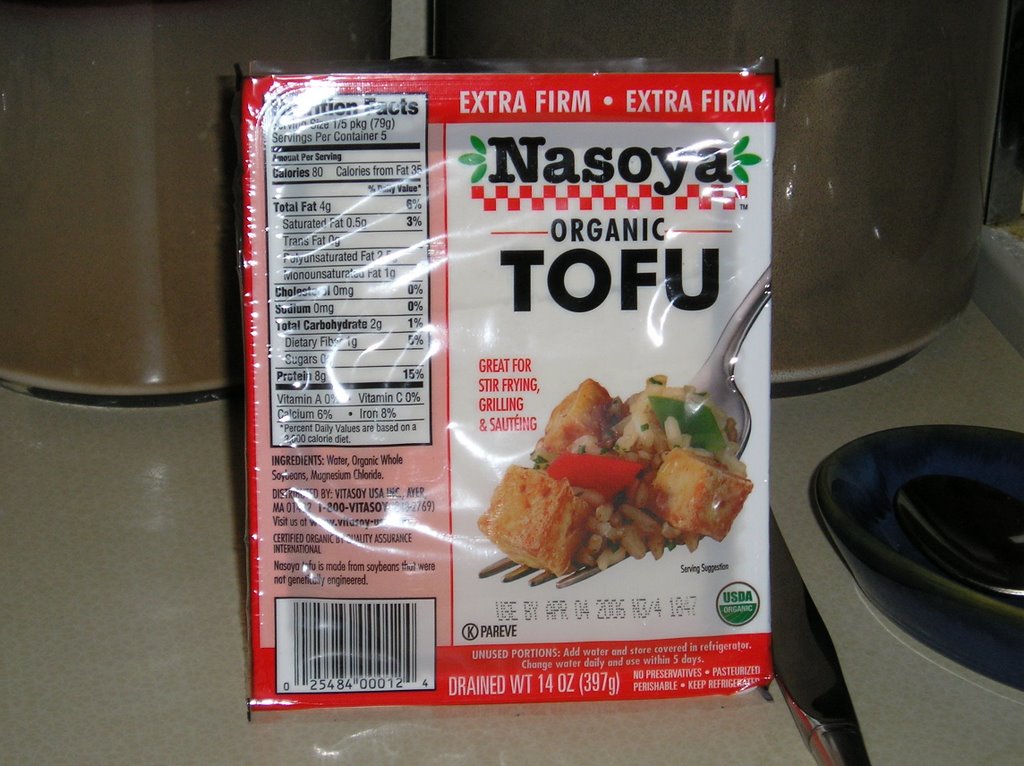
It usually comes in a square, water-packed box. Traditional, or Chinese tofu must be refrigerated. It can range from extra-firm to soft. Japanese tofu, or silken, comes in a box that can sit on the shelf and requires no refrigeration. It too can range from firm to soft, but its texture makes it useful in different recipes than the traditional kind.


Here are some photos of different types of tofu (The first photos are two of the "silken" Japanese type that don't need refrigerating. The second photo is the firm Chinese style that does.)


History: Like many of these ancient foods, tofu's history is somewhat muddled. There are three theories as to its first creation, the most popular of which seems to be that tofu was accidentally created when a salt was added in an attempt to flavor soybeans. Writings of tofu appear as early as 900 A.D., but one theory has it created as early as 100 A.D. Another theory suggests that the Chinese attempted to make the bean curd after learning about cheese making processes from the nearby Mongols.

At any rate, we do know that tofu was popular in ancient China over 2,000 years ago. It was popularized further by the Buddhists' vegetarian lifestyle and spread throughout Asia and Japan. Westerners did not become familiar with tofu until the mid 20th century when, much like tempeh and other soy foods, tofu was brought into mainstream knowledge by the Adventists and other vegetarians. (Information from: www.historyfoods.com, www.asiarecipe.com, and www.thesoydailyclub.com (Soyfoods Center).

Health benefits: High in protein, iron and calcium. Zero cholesterol! A good answer to the question of, "But what about your dairy?"

Myths and tips: My favorite quote comes from cookbook author, Sarah Kramer, in, "La Dolce Vegan!" (2005) She states, (in response to the statement: 'I hate the taste of tofu')- "That's ridiculous. Tofu on its own is bland but has the ability to take on the flavor of whatever ingredients it's cooked with. I think that what you're really saying is that you're afraid of trying new things. Get over it."

Sarah is correct. Every good cookbook will tell you that tofu is like raw chicken or flour. It doesn't taste good until you do something with it, because it's not meant to be eaten on its own! Its whole virtue is that it lacks an overwhelming flavor and takes on the flavors that you put it in. (On that note, I have always loved eating raw tofu- the firm kind only. I guess I am weird!)

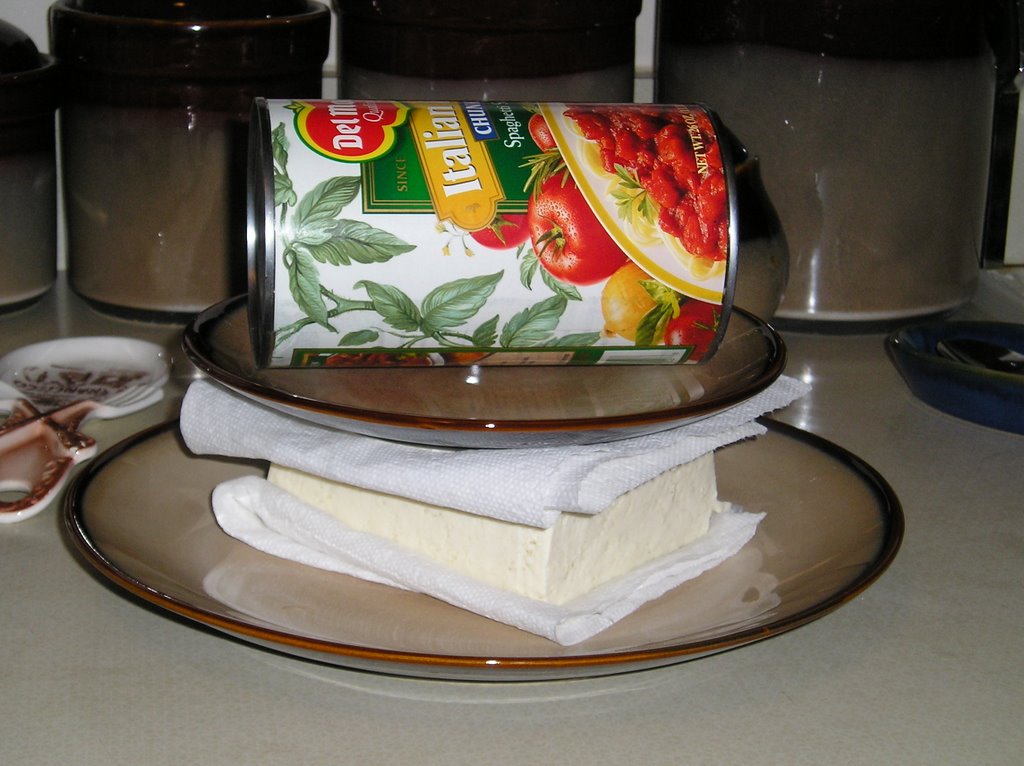
Tips- Pressing/Draining: While the smooth, soft kind typically doesn't get "pressed," firm tofu is usually pressed to release the extra liquid. This helps it retain its shape while cooking and make the recipe less "mushy." I place a heavy can on top of the tofu (see photo below) and let it drain onto a paper towel and plate for about 30 minutes. You can also slice it horizontally and drain it this way more quickly.


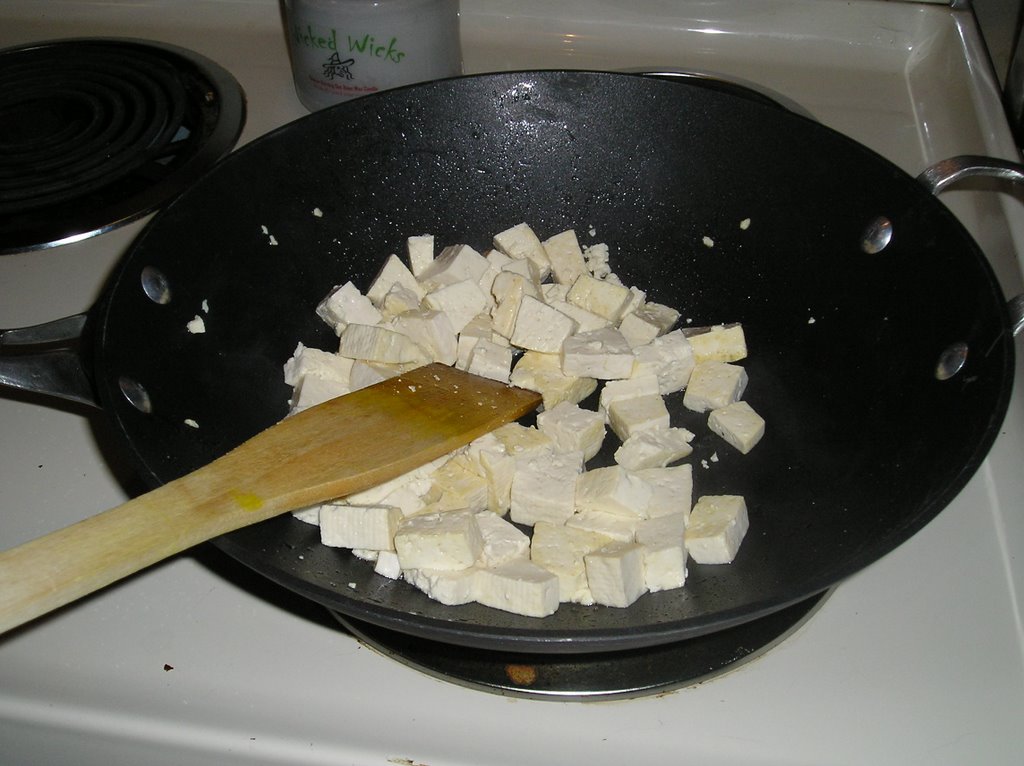
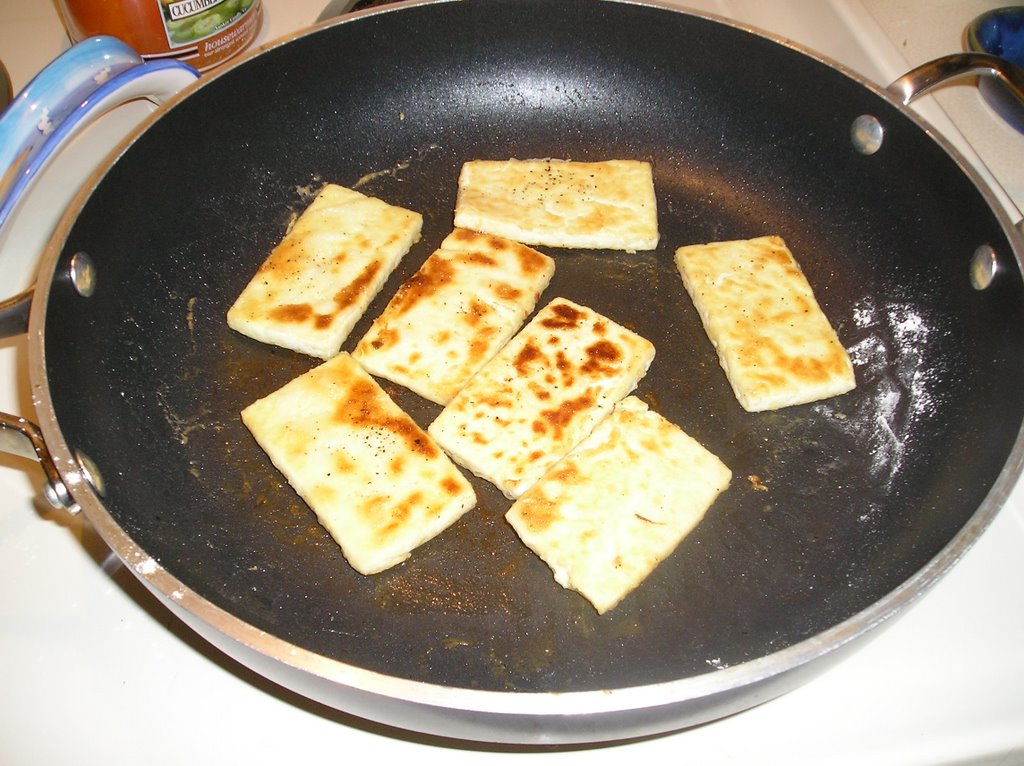
Browning: When browning tofu cubes such as for a stir fry, turn them very gently. I often use a long-handled fork to turn each individual piece, to insure they brown on every side. If your tofu cubes crumble, then you either didn't drain it enough or you're turning it too frequently or too rough (See photos below).


Refrigeration: Once tofu is opened (either kind) it must be refrigerated for a max of five days. It must be kept submerged in water during this time, and it's recommended that the water be changed daily.

Common uses: You name it, you can make it with tofu! From sauces to stir-fries, from smoothies to lasagnas, tofu can do it. You can even make desserts with tofu! It can act like a binding agent, replacing eggs in vegan recipes, as a filler as in stuffed vegetables or as a meat-replacement as in stir fries. The possibilities are endless!